
Build, buy or connect: a decision for North Carolina owners
If your North Carolina business is considering new software, start by comparing the work each option takes off your plate and the work it adds. Buying a product means less to build, but it may leave a workflow gap. Custom development can close that gap, and then you have to own and maintain what was built.
Write down the rule that makes your process different. Then check whether a setting in an existing product or an integration can handle it. We run this exercise during discovery so that any custom proposal answers a real requirement.
Compare the next investment
- Option
- Use an existing product
- Consider it when
- Its core workflow matches the way you need to operate
- Look closely at
- Configuration, data export and recurring cost
- Option
- Connect existing tools
- Consider it when
- The missing capability is the handoff between systems
- Look closely at
- Access, failure handling and ownership
- Option
- Build custom software
- Consider it when
- Existing tools cannot handle a workflow you rely on
- Look closely at
- Scope, maintenance and operating responsibility
| Option | Consider it when | Look closely at |
|---|---|---|
| Use an existing product | Its core workflow matches the way you need to operate | Configuration, data export and recurring cost |
| Connect existing tools | The missing capability is the handoff between systems | Access, failure handling and ownership |
| Build custom software | Existing tools cannot handle a workflow you rely on | Scope, maintenance and operating responsibility |
What we can build, finish or repair
We work on customer-facing applications, internal systems, mobile products and connected AI workflows. That could be a first product, a customer portal, a team’s administrative workflow or an existing application that has stalled. We start each project from the outcome you need and pick the technology after that.
If you already have a build, we find out what works before we propose replacing anything. If the idea is new, we identify the first complete journey a customer can take. When your main problem is deciding what to build or evaluating a vendor, a technical leadership engagement may help more than extra implementation capacity.
A practical brief for comparing software companies
Give each software company the same description of the problem, the users and your current systems. Ask each one to list its assumptions, what it excludes and the evidence it will use to show the work is complete. If you skip this, two quotes can look comparable while covering different products.
Include what happens after the software does its part. A customer request needs an owner, a status and a way to fix it when something fails. A developer should be able to explain those responsibilities in words your team can use.
- The current process and the part that fails or takes too much effort.
- The people using the system and what each role may do.
- The existing records and services the new workflow must connect to.
- The completed customer outcome and the evidence that proves it.
- The decisions, content and access your team must supply.
Keep ownership clear while the team grows
Your business should control its repository, domain, hosting and third-party accounts. The development team gets the access it needs to do the work, and your company keeps recovery and billing visibility. That holds whether the partner is down the road or works remotely.
Ask for an operating handover that covers configuration, releases and the essential customer journeys. You should be able to replace a vendor or hire an engineer of your own without piecing the product back together from someone else’s personal accounts.
Working with TDAT in North Carolina
Raleigh and Goldsboro have their own service guides because the buying questions deserve local context. For work elsewhere in North Carolina, call to discuss the product, the people involved and the review process. Remote delivery and any on-site sessions are agreed as part of the engagement.
We set milestones you can review, each built around the customer journey. At each one you should see the agreed workflow running in the environment that matters, with the data and permissions it needs. A build that works on a laptop is a useful milestone, but your customers cannot use it until it is deployed.
Public planning resources before you commit to a build
The North Carolina Small Business and Technology Development Center provides business advisory resources. The NC Small Business Center Network also provides local centers and training. Both are good places to start if you are still working out the customer, the operating model or the business plan the software is supposed to support.
Answering those planning questions makes for a better development brief. If you are unsure whether the business model works, more engineering alone will not tell you. Once the outcome is clear, we can help turn an agreed business process into technical scope.
How working with TDAT is arranged
If you work across North Carolina, you do not need a copy of the same application for each office. Agree who owns decisions, which systems the software connects to and how staff in different locations will review releases. TDAT operates remotely with a legal base in North Carolina.
The engagement names the review milestones, the people who accept the work and the operating information your team gets at handover. We agree any travel or on-site requirements before you commit.
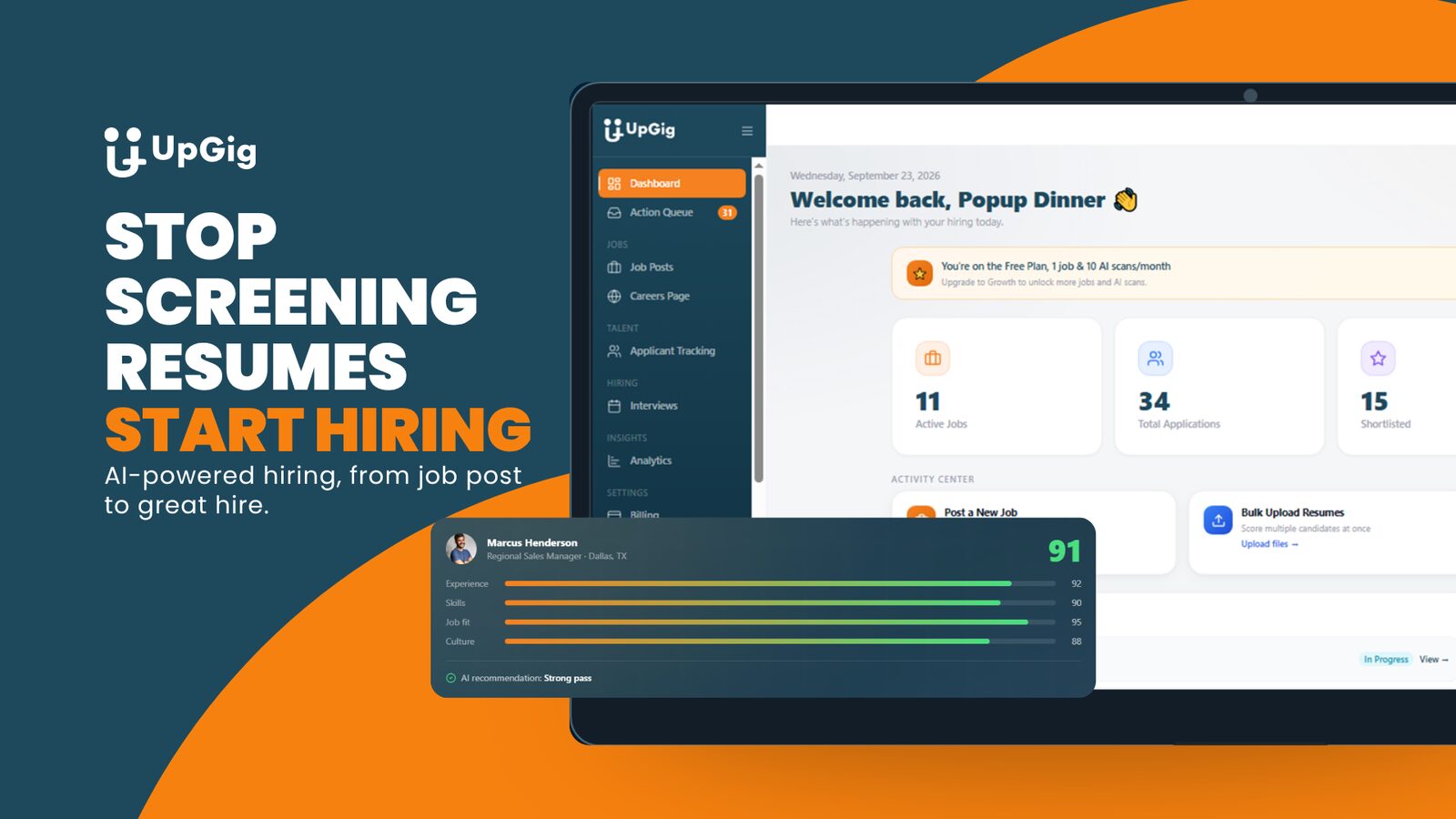
From our work / UpGig
The UpGig example from our work connects candidate information, employer workflows and AI phone screens. It shows the kind of complete product journey to examine when comparing a software proposal.
Read the UpGig case studyBefore choosing a North Carolina software company
Use the same questions with every potential technical partner.
- What existing software or smaller integration should we consider first?
- Which complete workflow is included in your proposal?
- What evidence will show that the deployed version works?
- Who owns the code, data, accounts and operating documentation?
- How are changes, post-launch fixes and ongoing support agreed?
Our service area
Service-area overview.
We can deliver your North Carolina software project.
We will scope a remote engagement with named owners, reviewable releases and business-controlled accounts. Meeting arrangements and implementation responsibilities are agreed before work starts.
Book a free consultationOn the project call, we’ll discuss the problem, your existing tools and what TDAT should take off your hands. Then we can define the scope and next steps.
Or call (919) 289-1231
Questions before we start
Do you serve businesses outside Raleigh and Goldsboro?
Yes, we can discuss projects elsewhere in North Carolina. We agree how the work is delivered and any on-site availability for each engagement.
Should I buy existing software instead of building?
Consider it when an existing product can handle the workflow that matters most. Discovery should find the gap that justifies custom work, if there is one.
Can you take over software built by another company?
Yes. We look at the current implementation and who owns the accounts before we recommend whether to complete, repair or replace it.
Do I need a detailed technical brief?
No. Start with the business process, users and outcome. We can help turn those into a reviewable scope.
Where can I start if the business plan is still uncertain?
The SBTDC and NC Small Business Center Network provide public planning and advisory resources. Their help can clear up the business questions that come before a software build.